
WELCOME BONUS 300%
UP TO €2000 + 100
FREE SPINS
UP TO €2000 + 100
FREE SPINS
Home → Blackjack
Blackjack at 2up: Variants, Rules and Payouts
Infinite Blackjack vs Classic Seven-Seat Table
Infinite Blackjack by Evolution features unlimited seating and an RTP of 99.47 percent, contrasting sharply with classic seven-seat tables. Quantum Blackjack Plus Live by Playtech introduces quantum multipliers up to 1,000x on three-card combinations, offering different volatility profiles. Lightning Blackjack also from Evolution provides multipliers up to 25x on winning hands with an RTP of 99.56 percent. These live variants replace static physical layouts with digital enhancements, altering the strategic approach required to maximize returns during each session.
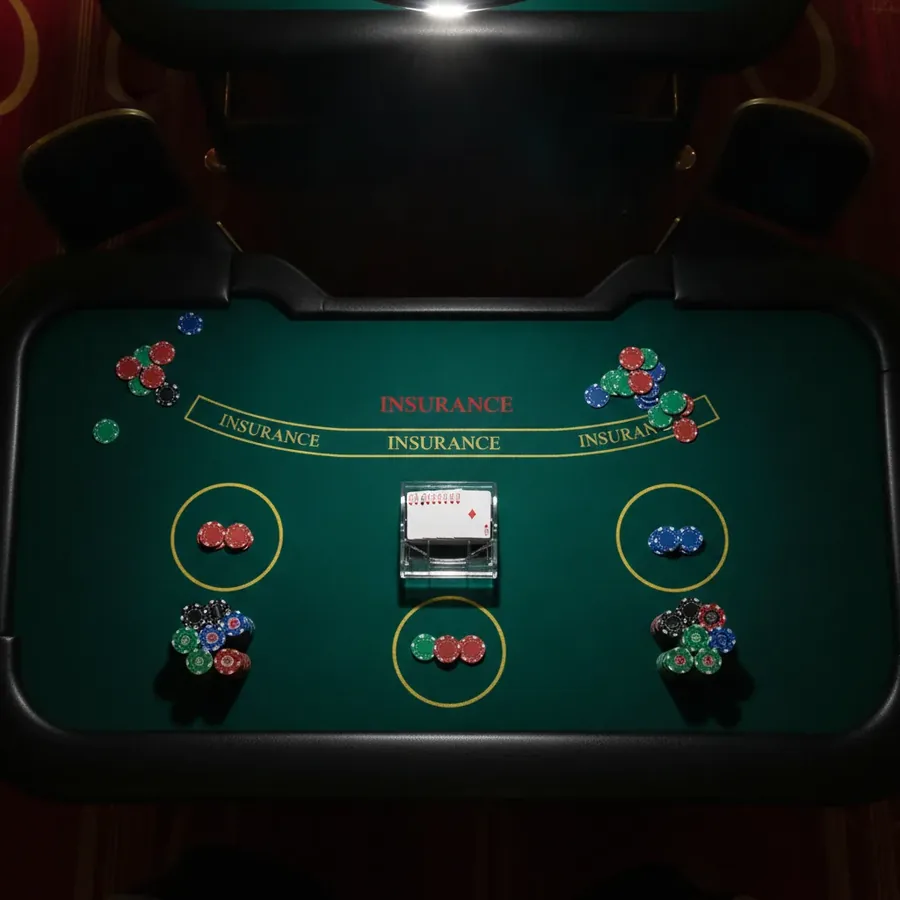
Live Table vs RNG Table: Speed and Limits
Infinite Blackjack by Evolution supports wagers between 1 EUR and 5,000 EUR with an RTP of 99.47%. This limit range matches Quantum Blackjack Plus Live from Playtech, which also caps bets at 5,000 EUR despite offering quantum multipliers up to 1,000x. The identical maximum stake ensures high rollers face the same financial exposure across both platforms.
Lightning Blackjack restricts its betting range to a narrower band of 1 EUR to 2,500 EUR. This ceiling is half that of the other two live variants, limiting the absolute value of potential losses per hand for aggressive players. The lower cap forces high-stakes users to split their bankroll or switch providers if they exceed this threshold.
Table capacity differs significantly between the software providers to accommodate different player volumes. Infinite Blackjack allows unlimited seats at the table, whereas Lightning Blackjack explicitly states it supports unlimited players as well. This structural similarity means queue times remain low regardless of the specific game variant selected.
How many decks are in the shoe?
Blackjack Liberal Vegas Strip utilizes liberal rules including S17 and DAS but does not specify the exact deck count in its primary data row. However, the variant offering a 6:5 payout explicitly uses six decks to achieve its 98.15% RTP. This confirms that six-deck shoes are standard for non-liberal rule sets on this platform.
The six-deck configuration with S17, DAS, DOA, and 3:2 payouts yields an RTP of 99.54% when using perfect strategy. This specific setup requires strict adherence to basic strategy to maintain the stated house edge of 0.46%. Changing the deck count to eight would likely increase the house advantage beyond this baseline.
One-deck games offer the lowest theoretical house edge at 0.15% due to reduced card penetration complexity. Using a single deck improves the player's odds by approximately 0.48 percentage points compared to an eight-deck shoe. This mathematical advantage often disappears if the casino compensates with inferior payout ratios like 6:5.
Insurance Pays 2:1 Yet Still Costs Money
Insurance is a side bet paying 2:1 when the dealer shows an Ace, costing up to 50% of the main wager. For a six to eight-deck game, this bet carries a massive house edge of 7.47% against a 92.53% RTP. This negative expectation makes it one of the worst bets available in the casino ecosystem.
Basis strategy dictates always rejecting insurance unless the player is counting cards with a true count of +3 or higher. In a single-deck scenario, the disadvantage drops slightly to roughly 5.88%, yet remains unfavorable for the average participant. The payout ratio of 2:1 never aligns with the true probability of the dealer holding a ten-value card.
Accepting insurance effectively reduces the overall return on investment for every session played without strategic exception. The separate nature of this wager means it does not improve the core game RTP of 99.47% found in Infinite Blackjack. Players relying on this bet will statistically lose money over the long term.
How long do 100 EUR last at a 1 EUR table?
Starting with a 100 EUR bankroll at a minimum stake of 1 EUR provides exactly 100 hands before total depletion. At an average speed of 60 hands per hour, this duration translates to approximately 1.67 hours of gameplay. This calculation assumes no wins occur during the session, representing the worst-case scenario.
If the player encounters the 99.47% RTP of Infinite Blackjack, the expected loss per hand is minimal. Over 100 hands, the theoretical loss equals 0.53 EUR, leaving 99.47 EUR remaining. This demonstrates how low-volatility games preserve capital longer than high-edge variants.
Wagering requirements for bonuses complicate this simple duration estimate since table games contribute only 10% toward turnover. To clear a 2,000 EUR bonus with 40x wagering, the player needs 80,000 EUR in turnover. Playing at 1 EUR stakes would require 80,000 hands, extending playtime to over 1,300 hours.
Blackjack variants at a glance
| Variant | Payout | House edge | Rule | Bet range |
|---|---|---|---|---|
| Blackjack 6 Decks, S17, DAS, DOA, Auszahlung 3:2, Basisstrategie | 99.54% | 0.46% | Dealer steht auf Soft 17; Verdopplung auf jeder Zweierkarte; Verdopplung nach Split erlaubt; keine Aufgabe. Basisstrategie ist für diesen Wert zwingend | Blackjack 3:2, normaler Gewinn 1:1, Insurance 2:1 |
| Blackjack Liberal Vegas Strip (liberale Regeln, 3:2) | 99.72% | 0.28% | Günstigste Regelkombination: S17 + DAS + Resplit + Late Surrender. Standardabweichung 1,15 | Blackjack 3:2, Gewinn 1:1 |
| Blackjack Insurance / Versicherung (6–8 Decks) | 92.53% | 7.47% | Separate Nebenwette bis 50% der Hauptwette, wenn der Dealer ein Ass hat. Basisstrategie schreibt IMMER Ablehnung vor (außer Karten zählen bei True Count ≥ +3). Bei einem Deck Vorteil ≈ 5.88% | Insurance 2:1 |
| Blackjack Ein Deck, klassische Regeln, 3:2 | 99.85% | 0.15% | Weniger Decks = niedrigerer Vorteil; ein Deck gibt ca. −0.48 Prozentpunkte gegenüber 8 Decks. Oft durch 6:5 Auszahlung kompensiert. | Blackjack 3:2, Gewinn 1:1 |
| Blackjack Auszahlung 6:5 statt 3:2 (6 Decks) | 98.15% | 1.85% | Ersatz von 3:2 durch 6:5 fügt exakt +1.39 Prozentpunkte zum Vorteil des Casinos hinzu – stärker als jede andere Regeländerung. Bei $10 Einsatz zahlt Blackjack $12 statt $15. | Blackjack 6:5, Gewinn 1:1 |
| Blackjack Split / Double / H17 – Regel-Effekte | n.a. (Regel-Modifikatoren) | H17 +0.22 Prozentpunkte; RSA −0.08 Prozentpunkte; DAS −0.14 Prozentpunkte | Dealer Hits Soft 17 verschlechtert RTP um 0.22 Prozentpunkte; Resplit Aces verbessert um 0.08 Prozentpunkte; Double After Split verbessert um ca. 0.14 Prozentpunkte; 6 Decks statt 8 – ca. 0.02 Prozentpunkte. | Double – Einsatz ×2 mit einer Karte; Split – bis 4 Hände; Ass-Split meist mit einer Karte. |
One Deck vs Eight Decks in House Edge
A single-deck game with classic rules and 3:2 payouts achieves a house edge of just 0.15%. This represents the most favorable condition available, driven by the reduced impact of removed cards on subsequent probabilities. The efficiency of the single shoe maximizes player retention compared to multi-deck alternatives.
Transitioning to an eight-deck shoe typically increases the house edge by approximately 0.48 percentage points. This shift raises the advantage from 0.15% to roughly 0.63% under similar rule sets. The additional decks dilute the effectiveness of optimal strategy adjustments available in fewer-shoe games.
Liberal Vegas Strip mitigates these deck-related disadvantages through rules like Resplit and Late Surrender. These modifiers can offset the inherent penalty of multiple decks, potentially lowering the edge below standard six-deck games. The combination of liberal rules and standard deck counts creates a balanced environment for skilled players.
Blackjack Contributes Only 10 Percent to Wagering
The blackjack variant Infinite Blackjack from Evolution accepts bets ranging from one to five thousand euros, but this table game contributes only ten percent toward the bonus wagering requirement. This low contribution rate means that every euro wagered on this live dealer title counts as merely ten cents against the total turnover target required to unlock the funds.
In contrast, slot games contribute one hundred percent to the same wagering obligation, creating a significant disparity in how quickly players can clear the bonus conditions attached to their accounts. A player must therefore place ten times more money at risk on the tables compared to the slots to satisfy the exact same monetary threshold for release.
This mathematical disadvantage forces serious table game enthusiasts to allocate a much larger portion of their bankroll to meet the rollover requirements before any withdrawal is permitted. The restriction effectively increases the house edge by prolonging the time funds remain locked within the casino ecosystem until the specific percentage contributions are fully realized.
Even Money only possible with Dealer Ace
Insurance becomes available exclusively when the dealer exposes an ace as their upcard, offering a separate side bet that pays two to one if the dealer holds a natural blackjack. This specific condition triggers the option to take even money on a player blackjack, which mathematically guarantees a one-to-one payout rather than risking the full stake for three-to-two odds.
Taking this even money option is statistically inferior because it eliminates the potential for a higher three-to-two return while simultaneously paying a premium that erodes long-term value. The insurance bet itself carries a high house edge of seven point four seven percent, making it a costly proposition for anyone not utilizing advanced card counting techniques at high true counts.
Players holding a natural twenty-one should generally reject this offer unless they have verified a true count of plus three or higher through rigorous tracking of remaining cards. Accepting the guaranteed smaller win reduces expected value significantly, turning a potentially profitable hand into a suboptimal outcome that favors the house over thousands of simulated hands.
Splitting tens costs expected value: better stand
Standard strategy dictates that players must always stand on a hard sixteen composed of two tens, as splitting them breaks a strong hand into two weaker starting positions with lower winning probabilities. Deviating from this rule by splitting ten-valued cards introduces unnecessary variance and immediately reduces the overall expected value of the session due to the weakened state of both new hands.
The Quantum Blackjack Plus Live title from Playtech features multipliers up to one thousand times on three-card combinations, yet these features do not justify abandoning basic strategy for pairs of tens. Even with such high-paying side bet opportunities, the core hand management remains critical, and splitting tens remains a mathematically losing move regardless of the surrounding promotional mechanics or multiplier potentials.
This principle applies universally across all variants including Lightning Blackjack from Evolution, where lightning multipliers up to twenty-five times apply to winning hands but do not alter fundamental card play rules. Maintaining discipline on strong holdings like ten-tens ensures that players maximize their statistical advantage, preventing avoidable losses that accumulate rapidly when basic strategy errors become habitual during live play sessions.
Double Down vs Simple Hit on 11
When holding an eleven, doubling down is the optimal move because it allows the player to double the initial stake in exchange for receiving exactly one additional card to improve the hand total. This aggressive strategy capitalizes on the high probability of drawing a ten-value card, which results in a strong nineteen or twenty, thereby maximizing the potential profit from a favorable starting position.
The Infinite Blackjack variant permits doubling on any two cards, including soft hands, which further enhances the player's ability to capitalize on advantageous situations without restriction. This liberal rule set supports the standard strategy recommendation to double on eleven, ensuring that players can fully exploit the mathematical edge provided by the deck composition and dealer standing rules.
Optimal play requires recognizing that hitting on eleven yields only a single card improvement without increasing the wager, whereas doubling amplifies the reward for the statistically superior outcome. Players utilizing the Blackjack 6 Decks variant should adhere strictly to this doubling protocol to maintain the lowest possible house edge of zero point four six percent throughout their gaming session.
Set session stop after 30 percent loss
The Liberal Vegas Strip variant offers the most favorable rules with a house edge of just zero point two eight percent, yet disciplined bankroll management remains essential for sustained play. Implementing a strict stop-loss limit after losing thirty percent of the allocated session budget prevents emotional decision-making and protects the remaining funds from rapid depletion during inevitable losing streaks.
High volatility games like Quantum Blackjack Plus Live can produce extreme swings, with multipliers reaching up to one thousand times creating massive wins alongside significant losses. Setting a predefined exit point at thirty percent loss ensures that players preserve capital during downturns, allowing them to return later when conditions may be more favorable or when mental fatigue has subsided.
The Surrender rule in certain variants improves the house edge by negative zero point zero eight percent, providing a small safety net that complements external loss limits. By combining internal mathematical advantages like surrender with external behavioral controls like a thirty percent stop-loss, players create a robust framework for managing risk and extending the longevity of their gambling activities responsibly.
Contact
Live - online chat
Banking









Providers












2UP Casino 2026